
Two Chokepoints, One shock: Implications of the Iran conflict Reshapes Global Trade and European Security
Intelligence cut off Date: 03 April 2026

Scope
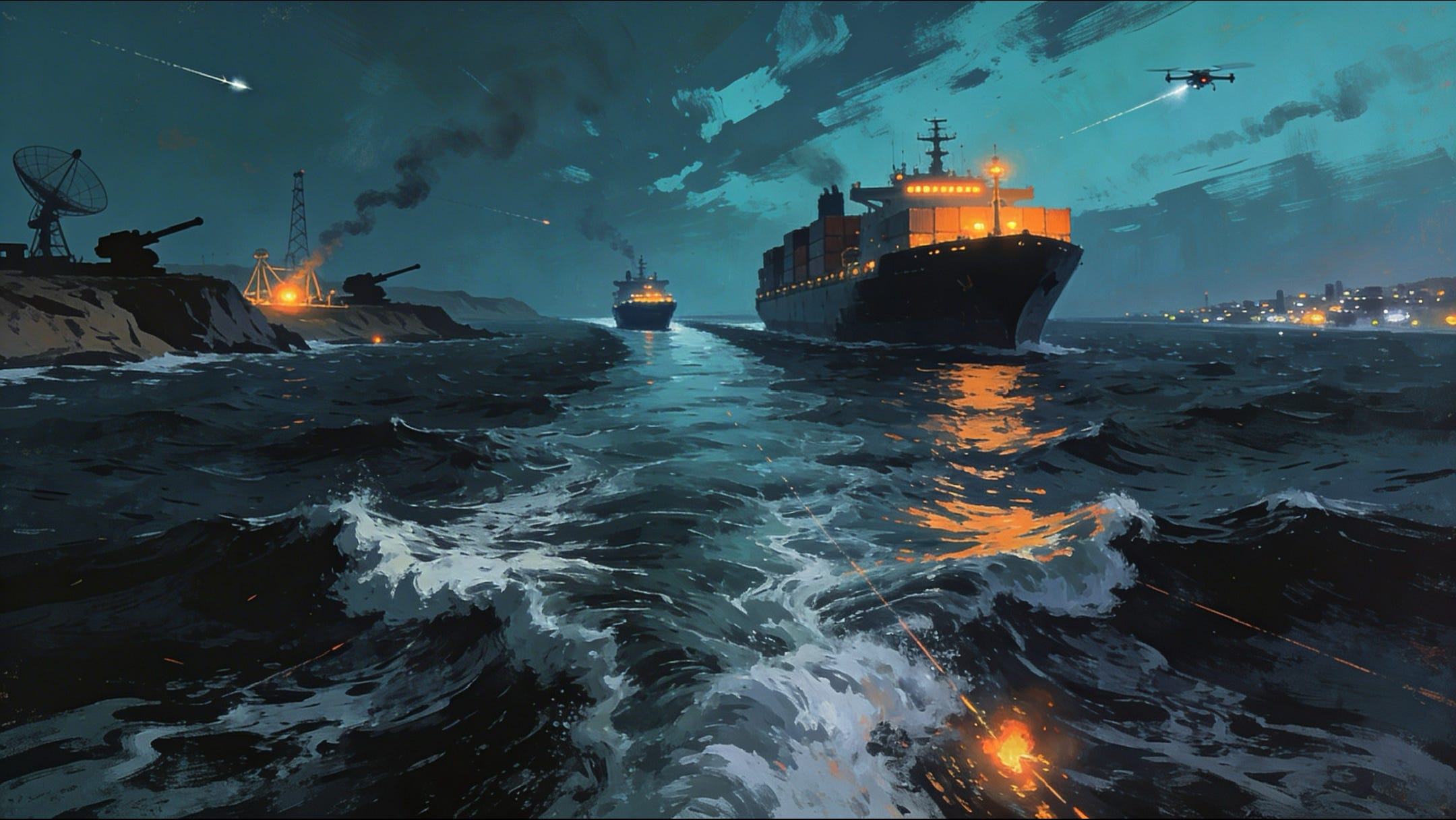
This assessment examines how the Iran conflict is disrupting traffic through the Red Sea/Suez corridor and the Strait of Hormuz and how a prolonged “dual‑chokepoint” shock could affect global trade and European energy security over the short term. It focuses on three medium‑term paths: contained disruption with partial normalisation, a protracted dual‑chokepoint crisis and a lower‑probability wider regional escalation involving sustained attacks on Gulf energy infrastructure and shipping.
Methodology
This assessment is based exclusively on open‑source reporting published between January and March 2026, including international press coverage, specialist maritime and energy analysis, satellite‑derived shipping data where available and think‑tank or industry reporting.
Sources were cross-checked where possible to mitigate single stream reporting risk.
Reporting on shipping movements, insurance pricing and transit fees is subject to commercial sensitivity and deliberate signalling by state and non-state actors; confidence in precise figures is therefore limited.
Executive Summary
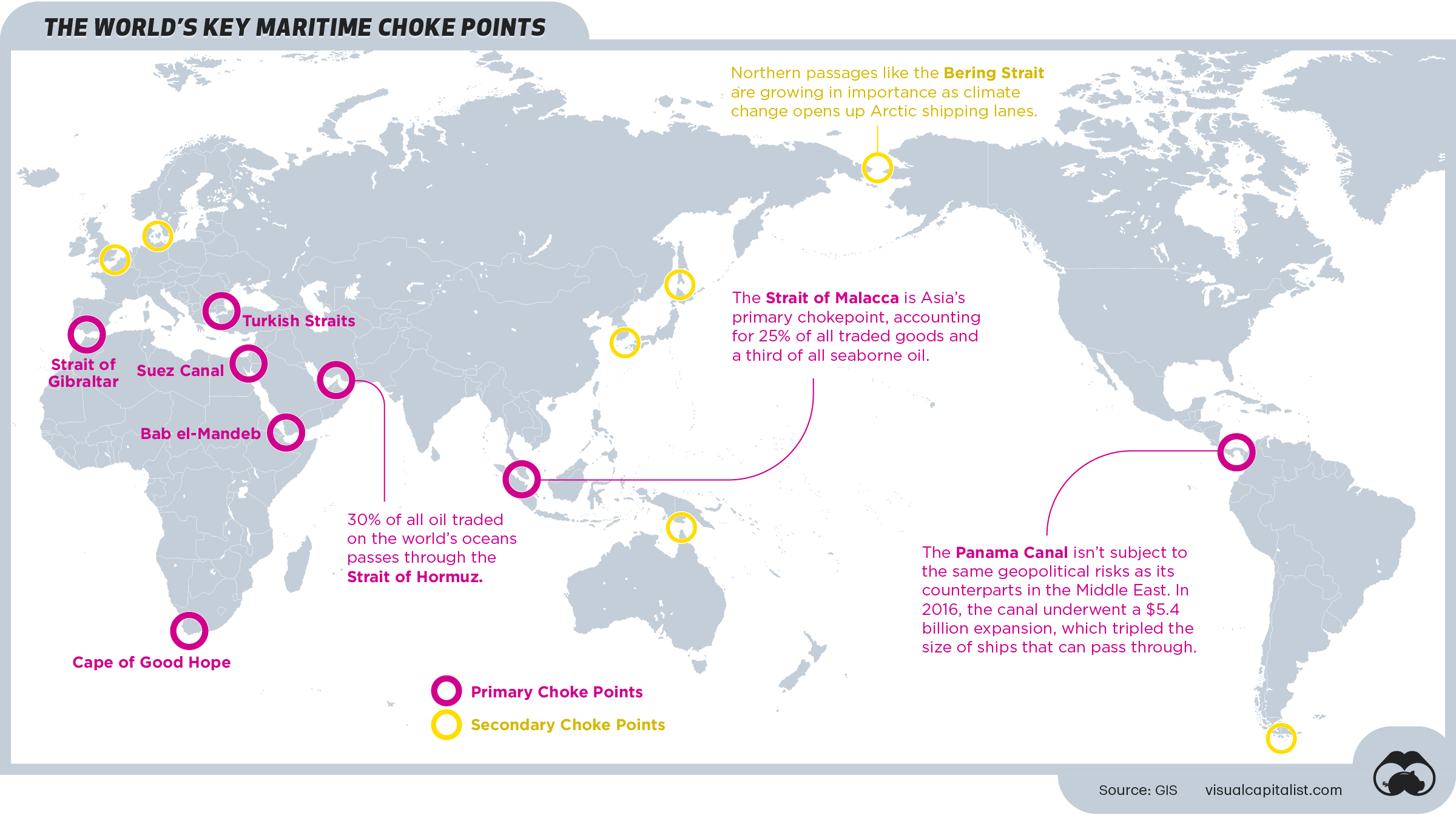
The Iran conflict has turned both the Red Sea/Suez corridor and the Strait of Hormuz into high‑risk chokepoints, prompting major shipping and energy companies to divert traffic around Africa and insurers to sharply increase war‑risk premiums.
Iran’s selective attacks and threats against commercial shipping, missile and drone strikes against Gulf energy infrastructure and the emergence of a de facto “toll booth” regime in Hormuz have created a nascent dual chokepoint shock, raising cost and uncertainty across global trade and energy markets.
A substantial United States (U.S) build-up, including multiple carrier strike groups and additional air and missile defence assets, reduces the immediate risk of a deliberate, sustained closure of Hormuz. However, it also concentrates Western naval and air resources in the Middle East, creating opportunity costs for Europe and other theatres
Over the short term, the most likely outcome is a contained but persistent disruption, with both chokepoints remaining partially usable under escort, elevated insurance costs and selective Iranian tolls, while a significant share of traffic continues to divert via the Cape.
More entrenched disruption, in which the Suez and Hormuz are treated as corridors of last resort, or wider regional escalation involving sustained attacks on Gulf energy infrastructure remain plausible and would carry significantly greater implications for European energy security, inflation and maritime security capacity. For the UK, limited gas storage capacity increases vulnerability to prolonged disruption of LNG flows via the Gulf and Red Sea.
Key Judgements
KJ1. It is highly likely that the Iran conflict will continue to disrupt Red Sea and Gulf shipping through 2026, with major container and tanker operators maintaining diversions away from the Red Sea and, increasingly, the Strait of Hormuz.
KJ2. It is likely that a de facto “dual‑chokepoint” regime emerges in the coming months, in which both Suez and Hormuz are usable only under elevated risk and cost conditions, forcing a sustained increase in Cape‑route traffic and war‑risk premiums.
KJ3. There is a realistic possibility that Iran or its partners conduct further missile and drone attacks on Gulf energy infrastructure, particularly export terminals and refineries in Saudi Arabia, Qatar and the UAE, in response to continued strikes on Iranian territory and assets.
KJ4. European states are increasingly exposed not only through higher energy and freight costs but also through pressure to expand naval deployments and sanctions, and their policy choices over the next year will heavily influence whether disruption remains contained or evolves into a protracted structural shock.
KJ5. It is likely that the growing US military build‑up in the Middle East, including the deployment of two to three carrier strike groups, additional air assets and thousands of troops redeployed from other theatres, including Europe, will contain the immediate risk of a full Hormuz closure but at the cost of leaving NATO’s eastern flank and other theatres relatively thinner in the short term.
Situation Overview
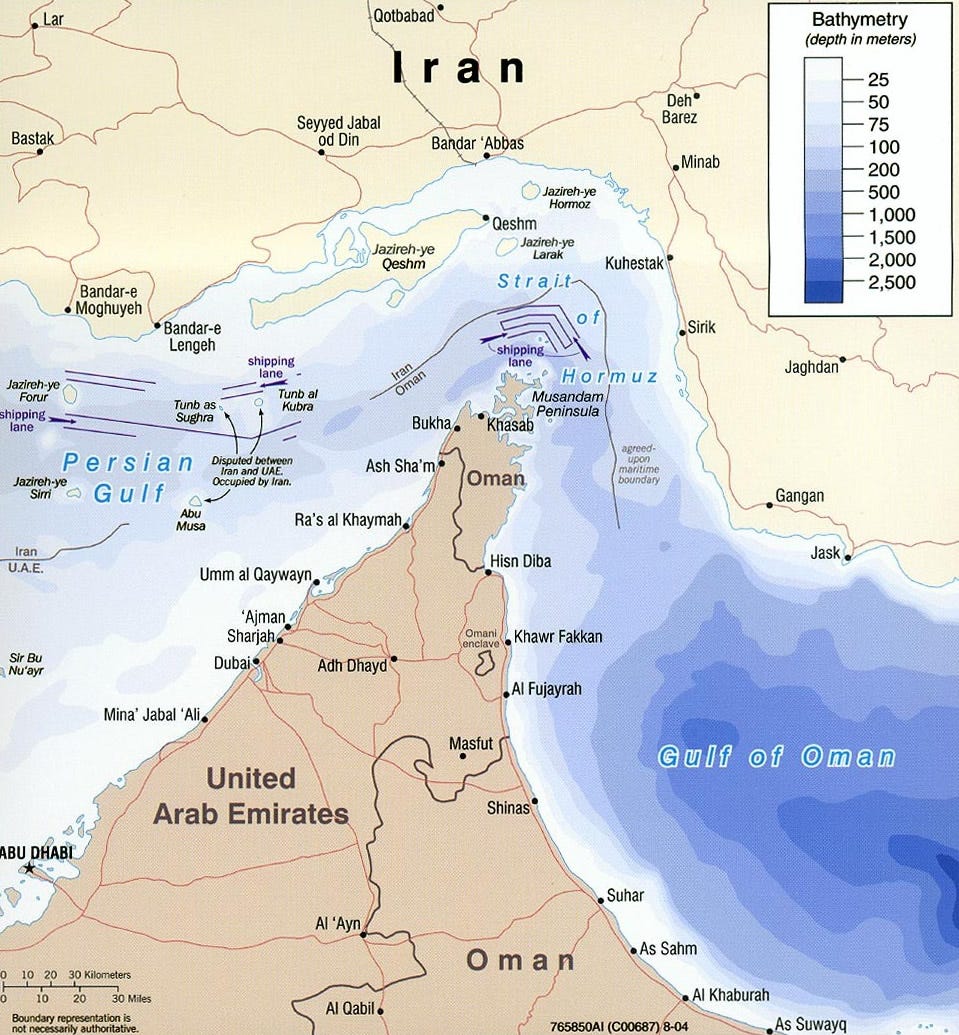
The conflict centred on Iran has sharply reduced commercial confidence in both the Red Sea/Suez corridor and the Strait of Hormuz. Following U.S-Israeli strikes on Iranian targets and Iran-linked attacks on commercial vessels, traffic through Hormuz has fallen markedly, with many Western-aligned tankers delaying transit or diverting via the Cape.
Iranian authorities and the Islamic Revolutionary Guard Corps (IRGC) have moved to formalise tighter control over Hormuz through a de facto toll regime, reportedly charging vessels substantial fees for safe passage along IRGC designated routes and pursuing draft legislation to codify transit charges. Tehran presents this as a sovereign right; Gulf states and external powers view this as an attempt to assert unilateral control over an international strait and discriminate between “friendly” and “hostile” traffic.
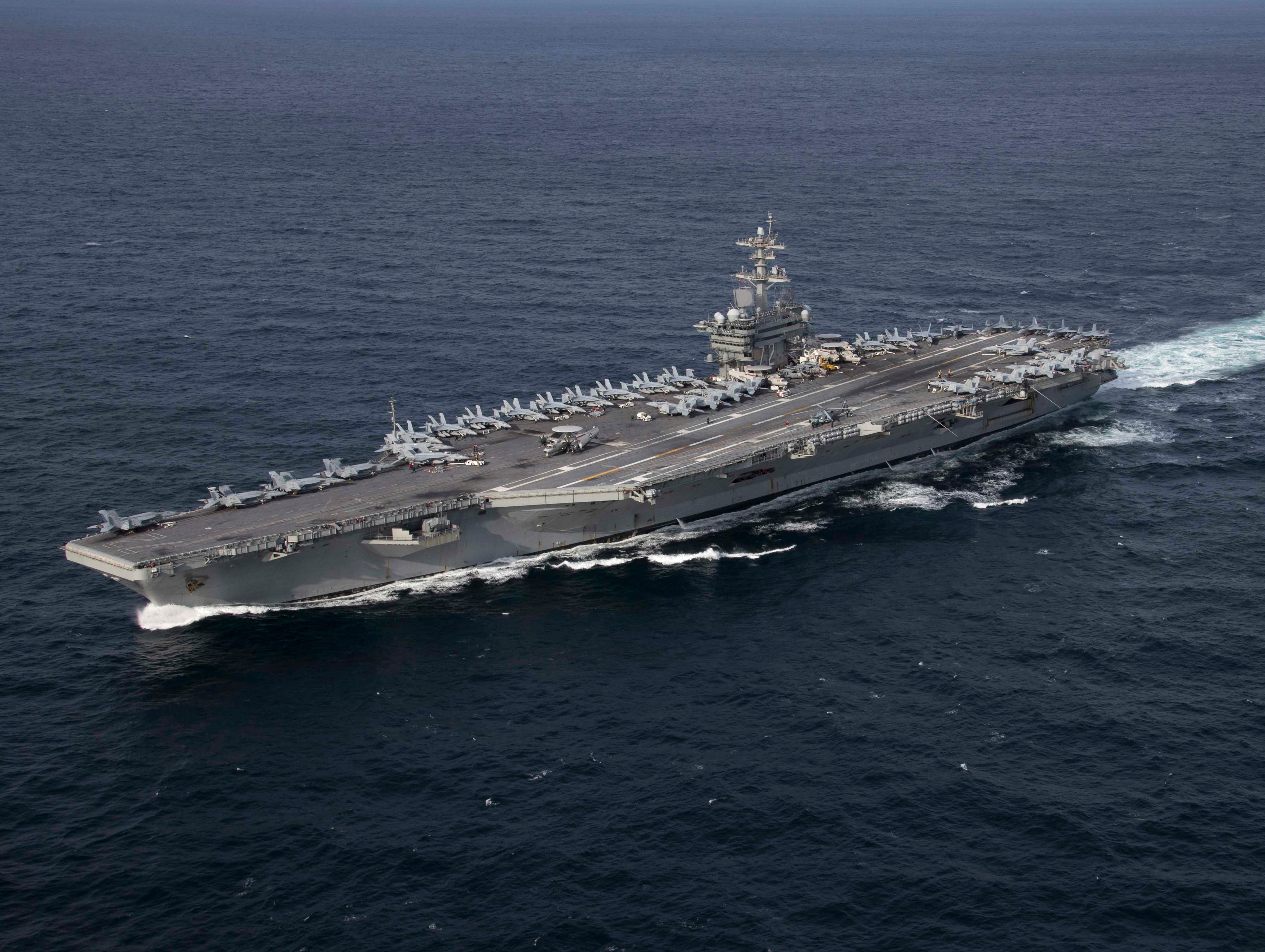
The United States has responded with its largest regional military build‑up since the 2003 Iraq invasion, deploying multiple carrier strike groups, air assets and ground forces to the broader theatre. Assets now include the USS Abraham Lincoln and USS Gerald R. Ford carrier strike groups in the Arabian Sea and eastern Mediterranean, with a third carrier, USS George H.W. Bush, preparing to deploy, alongside additional fighter squadrons and Patriot air‑defence missiles redeployed from Europe.
While this posture reduces the risk of an outright closure, it also increases escalation risk through miscalculation and limits Western flexibility elsewhere.
Together, these dynamics have produced a nascent dual-chokepoint shock in which Hormuz and the Red Sea remain technically open but commercially constrained by elevated risk, cost and political leverage.
Assessment
Contained disruption with partial normalisation – Most likely
On current trends, the most probable path over the short term is a contained but persistent disruption in which both Hormuz and the Red Sea remain high‑risk but partially usable corridors under escort, higher insurance costs and selective Iranian tolls.
Major container and tanker operators continue to route a significant share of traffic via the Cape of Good Hope, but some flows gradually return to Suez and Hormuz for time‑sensitive cargoes and “friendly” flag states as naval patrols, convoy schemes and ad‑hoc understandings with Tehran reduce but do not remove the risk of attack or detention.
In this scenario, Iran’s “toll booth” regime consolidates as a de facto – though widely contested practice, applied unevenly to raise revenue and signal leverage without triggering a full attempt to close Hormuz.
The US naval build‑up and limited strikes help deter large‑scale escalation but stop short of directly destroying Iranian coastal assets, while Gulf producers adjust export patterns and stock management to cope with episodic disruptions.
For Europe, the result is a period of elevated but manageable freight and energy costs rather than an acute supply crisis, with policy attention focused on cushioning inflation and supporting shipping and energy firms exposed to higher war‑risk premiums.
Protracted dual‑chokepoint crisis – Plausible
A second, plausible path is that the current disruption hardens into a structural “dual‑chokepoint” crisis, in which both Hormuz and the Red Sea remain chronically unstable and underused for an extended period. In this trajectory, attacks and threats against shipping and energy infrastructure become frequent enough and insurance and risk assessments sufficiently negative that most major carriers and energy companies institutionalise Cape routing and alternative supply chains, treating Suez and Hormuz as corridors of last resort.
Iranian toll practices become more formalised and politicised, potentially expanding to cover a wider set of vessels and linking fee levels to sanctions, Israeli or US actions, or Gulf political stances.
Under this scenario, the US and European naval presence contains the most dangerous escalation risks but proves unable to restore commercial confidence in either chokepoint. Freight and energy prices settle at a structurally higher level, with knock‑on effects for European inflation, industrial competitiveness and fiscal policy.
European states face sustained pressure to increase maritime deployments, diversify energy sources more rapidly, and design sanctions and export‑control regimes that account for the long‑term leverage Iran can exert over key trade routes.
Wider regional escalation – Unlikely but high impact
A third path, assessed as unlikely in the near term but with significantly higher impact, involves wider regional escalation in which attacks on Gulf energy infrastructure and shipping intensify and the risk of confrontation between Iran and the US or key regional states rises sharply. In this scenario, missile and drone strikes cause major, prolonged outages at refineries, export terminals or gas facilities in Saudi Arabia, Qatar or the UAE, and a series of high‑profile incidents – such as the sinking or mass seizure of tankers – temporarily render parts of Hormuz effectively impassable.
Such a trajectory would likely prompt more extensive US and allied strikes on IRGC coastal assets, naval units and missile infrastructure, alongside emergency efforts to organise protected convoys or, in extremis, to enforce limited exclusion zones. Even if the complete closure of Hormuz were avoided, the perceived risk could spike to the point where most commercial operators abandon both chokepoints for an extended period. For Europe, this would translate into sharp energy price spikes, potential physical supply constraints for certain products, heightened recession risks and increased demands for both naval contributions and crisis‑management diplomacy.
UK Policy Options and Risks
Energy Security and Economic Stability
Risks
Prolonged disruption increases UK exposure to LNG price volatility due to limited gas storage capacity.
continued reliance on LNG transiting the Gulf and the Red Sea.
Structurally higher freight costs feed into inflation and complicate monetary policy.
Policy Options
Accelerate the expansion of Gas storage and demand side flexibility options.
Prioritise non-Gulf LNG contracts and pipeline diversification where feasible.
Integrate Red Sea/Hormuz risk explicitly into UK energy security planning and stress-testing.
Maritime Security and Naval Capacity
Risk
Sustained deployment to the Middle East risks hollowing out the UK naval presence in the North Atlantic, Baltic and High North.
Pressure to contribute to convoy or escort operations could strain escort, logistics and readiness.
Policy Options
Focus UK naval contributions on high-valve niche roles ( mine countermeasures, intelligence sharing) rather than mass escort.
Use presence selectively to shape escalation dynamics rather than seek full route restoration.
Sanctions, Signalling and Escalation Control
Risk
Sanctions and enforcement actions risk being factored into Iranian toll practices or targeting decisions.
Poorly calibrated signalling could unintentionally push the system toward a protracted crisis.
Policy Options
Align sanctions strategy with realistic assessments on maritime leverage.
Maintain clear red lines on attacks on shipping and energy infrastructure while preserving off-ramps.
Coordinate messaging across allies to avoid fragmented or escalatory signals.
Alliance Management and U.S dependency
Risk
Heavy U.S focus on the Middle East reduces available U.S attention and assets for European contingencies.
UK alignment choices could narrow diplomatic room for de-escalation.
Policy Options
Use UK diplomatic channels to reinforce European crisis-management and de-escalation efforts.
Coordinate closely with European partners to hedge against U.S force diversion.
Maintain flexibility to adjust posture if U.S engagement in Europe weakens.
Indicators and Warnings
The following indicators can help monitor which of the three paths is becoming more likely over time.
Contained disruption with partial normalisation (most likely)
These suggest elevated but managed risk.
Stable but high Western naval presence: Two to three US carrier strike groups and escorts remain in‑theatre without emergency surges or sudden withdrawals.
Selective, not blanket, Iranian tolls: Toll demands and inspections are applied to some vessels and flags but stop short of a universal regime or explicit closure threats.
Partial return of traffic to Suez/Hormuz: Some container and tanker flows, especially time‑sensitive cargoes and “friendly” flags, resume transits under escort and higher war‑risk premiums while Cape routing remains significant.
Elevated but broadly stable war‑risk and freight rates: Insurance premia and freight costs remain above pre‑crisis levels but do not show sustained escalation or extreme volatility.
Limited, quickly repaired attacks: Missile/drone incidents against Gulf energy infrastructure cause short disruptions, with no pattern of repeated strikes on the same key facilities.
Protracted dual‑chokepoint crisis (plausible)
These indicate disruption hardening into a structural shock.
Formalisation and expansion of toll regime: Iran passes or enforces laws/regulations codifying transit fees and applies them systematically, with higher rates or restrictions for certain flags or sanctioning states.
Persistent under‑use of Suez and Hormuz: Major liners and energy companies institutionalise Cape routing and alternative supply chains, treating Suez/Hormuz as corridors of last resort even during quieter periods.
Sustained high war‑risk premiums: Elevated insurance and freight rates become the new baseline for Red Sea and Gulf routes over many months, despite the absence of major new incidents.
Normalised higher naval baseline: US and European navies build enduring tasking around these chokepoints rather than short‑term crisis deployments, embedding the posture into standing plans.
Accelerated European diversification moves: Fast‑tracking of LNG import capacity, storage, and non‑Gulf supply contracts, with explicit reference to Red Sea/Hormuz risk in policy documents and corporate disclosures.
Wider regional escalation (unlikely but high impact)
These would signal movement toward your high‑impact escalation scenario.
Large‑scale, repeated attacks on Gulf energy infrastructure: Coordinated strikes cause prolonged outages at major refineries, export terminals or gas facilities in Saudi Arabia, Qatar or the UAE, with follow‑on attacks hampering repairs.
High‑profile maritime incidents: Sinking, mass seizure or mining of large tankers/LNG carriers in or near Hormuz or the southern Red Sea, particularly involving Western or major Asian flags.
Emergency military surge and coercive measures: Rapid deployment of additional carrier/amphibious forces and public planning for enforced convoys, exclusion zones, or strikes on coastal and missile assets.
Explicit closure threats and physical preparations: Iranian leaders openly threaten closure, combined with observable mining activity, blockships, or live‑fire drills constricting key channels.
Disorderly price spikes and supply stress in Europe: Sudden, extreme volatility and spikes in LNG/oil prices, widening spreads between European and other benchmarks, and reports of physical tightness for certain products or fuels.
Conclusion
The Iran conflict has exposed how quickly stress at one maritime chokepoint can cascade into a dual‑chokepoint shock that reshapes routing patterns, raises baseline freight and energy costs and forces governments to re‑prioritise limited naval and diplomatic bandwidth.
On current trends, a contained but persistent disruption is the most likely outcome, but even this “manageable” scenario implies structurally higher logistics and energy costs for Europe and a prolonged period of elevated operational risk for firms dependent on Red Sea and Gulf routes.
A protracted dual‑chokepoint crisis or a wider regional escalation, while less likely, would significantly amplify these pressures and could tip some European economies into renewed inflationary or recessionary episodes.
For European governments and the UK in particular, the strategic challenge is to cushion these shocks while reducing medium‑term vulnerability. That implies accelerating diversification of gas and oil supply, investing in storage and resilience measures and recalibrating naval posture to contribute meaningfully to maritime security without hollowing out other priority theatres.
At the same time, sanctions, diplomacy and crisis‑management efforts will need to account for Iran’s demonstrated ability to leverage its geographic position over key trade routes, even short of an outright closure of Hormuz.
Annex A - Probability yardstick
Probability yardstick used in this assessment:
Almost Certain 90-100%
Highly likely 70-85%
Likely 55-70%
Plausible / Realistic possibility 25-40%
Unlikely 15-25%
Highly unlikely <15%
Annex B - Sources
https://www.wcshipping.com/blog/global-shipping-disruption-how-the-iran-conflict-is-reshaping-routes
https://united24media.com/latest-news/iran-imposes-2m-toll-on-select-ships-in-strait-of-hormuz-17095
https://www.automotivelogistics.media/supply-chain/iran-conflict-threatens-key-shipping-routes-in-the-middle-east-shippers-halt-operations-reroute-vessels-and-introduce-surcharges/2616951
https://www.jarsking.com/red-sea-crisis-2026-how-the-iran-war-is-choking-global-trade/
https://economictimes.indiatimes.com/industry/energy/oil-gas/iran-imposing-toll-system-for-vessels-in-strait-of-hormuz-report/articleshow/129815668.cms
https://www.castorvali.com/news/iran-strait-of-hormuz-shipping-crisis-2026/
https://www.bbc.co.uk/news/articles/c1d64p3q2d0o
https://www.19fortyfive.com/2026/03/a-third-u-s-aircraft-carrier-is-heading-to-the-iran-war-its-not-an-escalation-signal-its-a-sign-america-is-running-out-of-options/
https://www.forbes.com/sites/petersuciu/2026/03/04/supercarriers-deployed-to-the-middle-east-leaves-the-us-navy-spread-thin/